
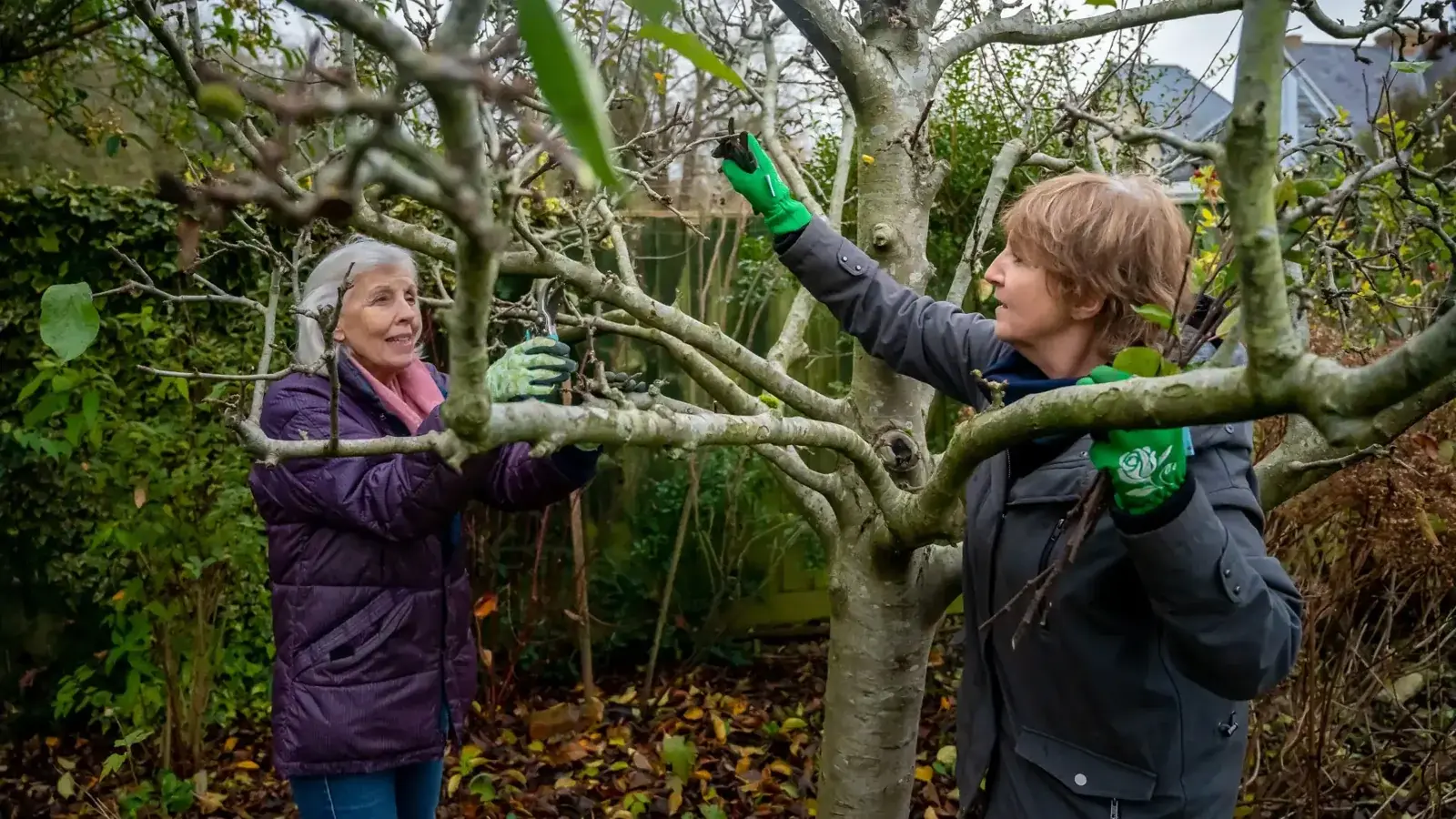
Harder than it looks, as it turns out.
Trees don't heal the way we do. A bad cut doesn't scab over and get forgotten about. It sits there for the rest of the tree's life, quietly letting rot in. Here are the six tree pruning mistakes we see most often around Auckland, and what you should do instead.
1. Pruning too Much at Once
You should never remove more than a quarter of the live canopy in one season, and less than that if the tree is old, stressed, or only recently planted. Leaves are how a tree feeds itself, so stripping the canopy takes away the food supply right when it needs to recover. What usually grows back is a burst of weak, whippy shoots.
This is the classic Saturday afternoon problem. You start with one dodgy branch, then another one looks out of place, and forty minutes later the poor thing looks like it's been dragged through a hedge backwards.
If the tree only needs tidying rather than reshaping, a light tree trim will do the job without the shock.
2. Topping the Tree
Topping is where the top of the tree gets cut back to stubs, usually at whatever height someone's decided looks right, rather than back to a branch that can take over the growth. It's quick, it's cheap, and it's about the worst thing you can do to a tree.
Those big flat cuts are far too wide for the tree to seal over, so decay runs straight into the trunk. The regrowth that shoots up afterwards is attached only to the outer layer of wood, which makes it far more likely to come down in the next decent nor'wester.
If a tree genuinely needs to be smaller, the answer is a proper crown reduction, cut back to sound branch structure rather than lopped off at the top.
3. Cutting Your Tree in the Wrong Spot
Have a look at where a branch meets the trunk, and you'll see a slightly swollen ring. That's the branch collar, and it's the tree's own repair kit. Cut flush with the trunk, and you remove it, leaving a wound the tree can't close. Cut too far out, and you leave a stub that dies back and rots. The sweet spot is just outside the collar, angled slightly away from the trunk.
For anything heavier than your arm, use the three-cut method: an undercut first, then a cut further out to drop the weight, then a tidy final cut at the collar. Skip that, and the branch tears a strip of bark down the trunk on its way to the ground.
4. Using Blunt or Dirty Tools While Pruning
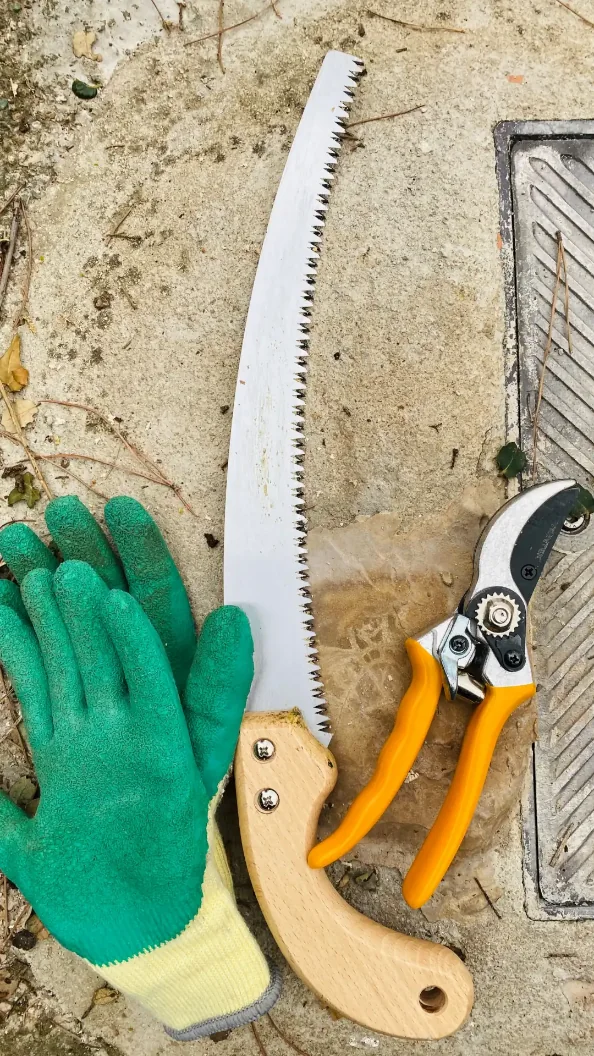
Blunt secateurs crush and tear rather than slice, and a ragged wound takes much longer to close than a clean one. Dirty blades are worse again; they'll carry disease from one tree to the next, which is a rough way to lose two trees instead of one. Clean tools are especially important around kauri, where soil and plant material moving on gear is part of how dieback spreads.
So: sharp secateurs for anything up to finger thickness, loppers or a pruning saw above that, and a wipe-down of the blades between trees. Those hand-me-down tools that have been living in the bottom of the shed probably aren't earning their keep.
5. Pruning at the Wrong Time of Year
A pruning date that suits one tree may be wrong for another. Apples and pears are commonly pruned in winter, while stone fruit such as plums are generally pruned after fruiting in summer.
Use the Auckland pruning timing guide for the seasonal distinctions and source guidance. For pōhutukawa, check flowering and tree protection requirements before deciding on the work.
6. Painting the Wound After Pruning
Leave the cut alone. Trees seal damage from the inside by walling it off, and painting over the wound traps moisture against it and can help the rot along nicely.
Wound sealants, tar and pruning paint are still on the shelf at every garden centre, but arborists went off them decades ago. Make a clean cut in the right place and then step away. It's one of the rare jobs where doing nothing is the correct answer.
When to Put the Saw Down and Call an Arborist
Light work at ground level is fair game for most people. Past that, the maths stops working in your favour.
Get a professional in if the job needs a ladder or a chainsaw, if there are power lines anywhere nearby, if the tree hangs over a fence, a driveway or the neighbour's glasshouse, or if it's a mature native you'd rather not experiment on.
Worth knowing too: plenty of trees around Auckland are protected under the Unitary Plan, and pruning one without consent can land you with a serious fine no matter how careful you were being. Our guide to Auckland's tree rules and regulations covers where you stand.
Get Your Pruning Done Right
We've been pruning trees across the greater Auckland area for more than 25 years. If you're not sure whether your tree needs a light trim, a proper reduction, or just to be left alone for another year, ask us.
Our certified arborists will take a look and give you a straight answer, along with a free, no-obligation quote. Get in touch with the team, and we'll sort it out.