
Updated . Official sources checked on this date.
When should you prune a pōhutukawa?
Plan routine shaping after flowering has finished. Auckland Botanic Gardens gives this advice for the pōhutukawa cultivar ‘Vibrance’. Its general pruning guidance also recommends working on flowering plants after their blooms finish. Read the Gardens’ pōhutukawa care advice.
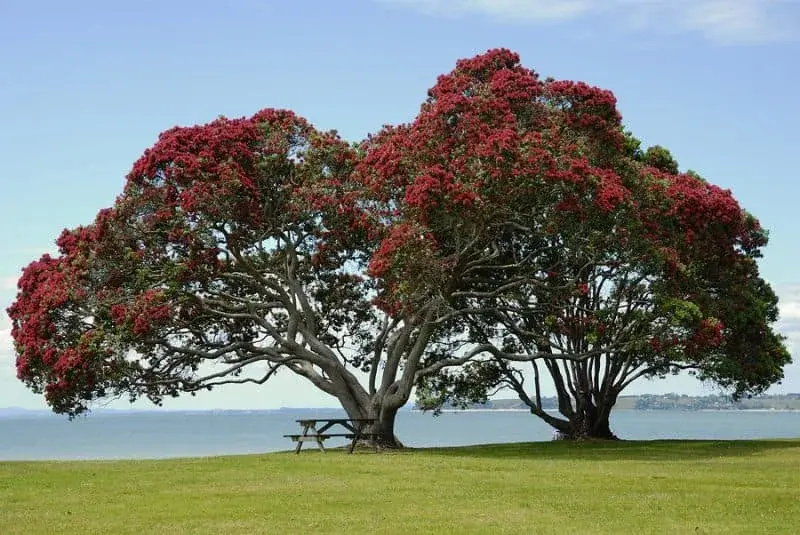
Auckland Council describes the usual flowering season as November to January, with a peak in mid to late December. That makes later summer a useful time to discuss routine pruning, once your tree has finished flowering. This is a planning guide, not a fixed deadline for every tree or situation. See Council’s flowering information.
What should pruning achieve?
Start with a specific reason for the work: a damaged branch, branches rubbing together, or a clearance problem. Auckland Botanic Gardens recommends addressing damaged and crossing branches and developing sound structure in young trees. Its pōhutukawa guidance identifies shaping and deadwood removal as reasons for pruning. Read the Gardens’ pruning guidelines.
Discuss the intended cuts with an arborist before committing to a major reduction. A photograph and a desired height are a starting point for a conversation, not enough to prescribe how much canopy to remove. If a branch looks unsafe, keep people away and arrange an assessment rather than waiting for a seasonal pruning date.
Do you need consent to trim a pōhutukawa in Auckland?
Check the property and proposed work first. Council’s tree consent guidance identifies several protections:
- Notable-tree status or a Significant Ecological Area.
- Coastal cliffs, streams, rivers and sensitive coastal or wetland areas.
- Conditions in an earlier resource consent.
- A covenant or consent notice on the property title.
Use the Unitary Plan map viewer, check the property records and confirm applicable requirements with Auckland Council. A tree on council land also needs the relevant council-owner approval. Council’s tree consent checklist is on pages 6 and 7 of this PDF.
Know the tree you are caring for
Mainland pōhutukawa, Metrosideros excelsa, naturally occurs in the upper North Island, north of New Plymouth and Gisborne. DOC notes that hairs beneath its leaves help distinguish it from rātā. Its red summer flowers explain the familiar name, New Zealand’s Christmas tree. Explore DOC’s pōhutukawa facts.
Look after the roots as well as the canopy
DOC identifies parking vehicles on roots as a cause of damage. Avoid treating canopy pruning as a solution to an unexplained decline. For young garden trees, Auckland Botanic Gardens recommends watering during dry periods in the first summer and autumn, and keeping mulch away from the trunk. Read establishment and maintenance advice.
Check for myrtle rust before handling suspect growth
Myrtle rust affects soft new growth, including leaves, buds and flowers. Its spores can travel on equipment and clothing as well as the wind. Do not collect a sample of suspected rust or handle a heavily infected plant. Follow DOC’s identification and reporting guidance before arranging work.
Pōhutukawa pruning FAQs
When is the best time to trim a pōhutukawa?
For routine shaping, plan pruning after flowering has finished. Auckland Botanic Gardens recommends this for pōhutukawa ‘Vibrance’. Use your tree’s flowering and condition to choose the timing, rather than a fixed month.
Auckland Botanic Gardens: pōhutukawa ‘Vibrance’ careCan I prune a pōhutukawa in winter or spring?
A calendar alone cannot decide this. The Gardens’ general guidance favours pruning flowering plants after their blooms finish. Ask for an assessment if work is needed at another time, especially for a damaged tree.
Auckland Botanic Gardens: pruning guidanceAre all pōhutukawa trees protected in Auckland?
A species name alone does not establish the rules for your tree. Check notable-tree status, ecological and water-related protections, earlier resource consents and title restrictions for the property.
Auckland Council: tree consent checks (PDF, pages 6 and 7)Can I remove 20% of the canopy without consent?
Do not treat an online 20% figure as permission to prune. The applicable Auckland rules depend on the tree, property and proposed work. Confirm the requirements with Auckland Council before cutting.
Auckland Council: tree consent checks (PDF, pages 6 and 7)Why is my pōhutukawa losing leaves or dying back?
Pruning is not automatically the answer. DOC identifies possum browsing, root damage and myrtle rust among threats to pōhutukawa. Have the cause assessed before deciding what to remove.
Department of Conservation: pōhutukawa facts and threatsWhat does myrtle rust look like on a pōhutukawa?
Look for yellow-orange powdery patches on young growth, or twisted, dying leaves and stems. DOC advises avoiding contact with highly infected plants and not collecting samples. Photograph suspected rust and follow DOC’s reporting guidance.
Department of Conservation: recognising myrtle rustHow much does pōhutukawa pruning cost in Auckland?
A useful quote needs the tree’s size, condition, access and proposed work. Send Heaven Contracting your address, photographs and what you want to achieve. We provide a free, fixed written quotation for the agreed work.
Official sources
Use these sources for further reading and confirm the current rules for your property before work starts.
- Auckland Botanic Gardens: pōhutukawa ‘Vibrance’ care
- Auckland Botanic Gardens: pruning guidance
- Auckland Council: pōhutukawa flowering in Auckland
- Auckland Council: tree consent checks (PDF, pages 6 and 7)
- Department of Conservation: pōhutukawa facts and threats
- Department of Conservation: recognising myrtle rust
Give your pōhutukawa the right care
Planning a trim, concerned about a branch or unsure where to start? Talk to Heaven Contracting about your Auckland property and the outcome you want.
Request a free written quote or call 021 061 3296.